Codecademy's Data Engineer Career Path: What It Actually Teaches

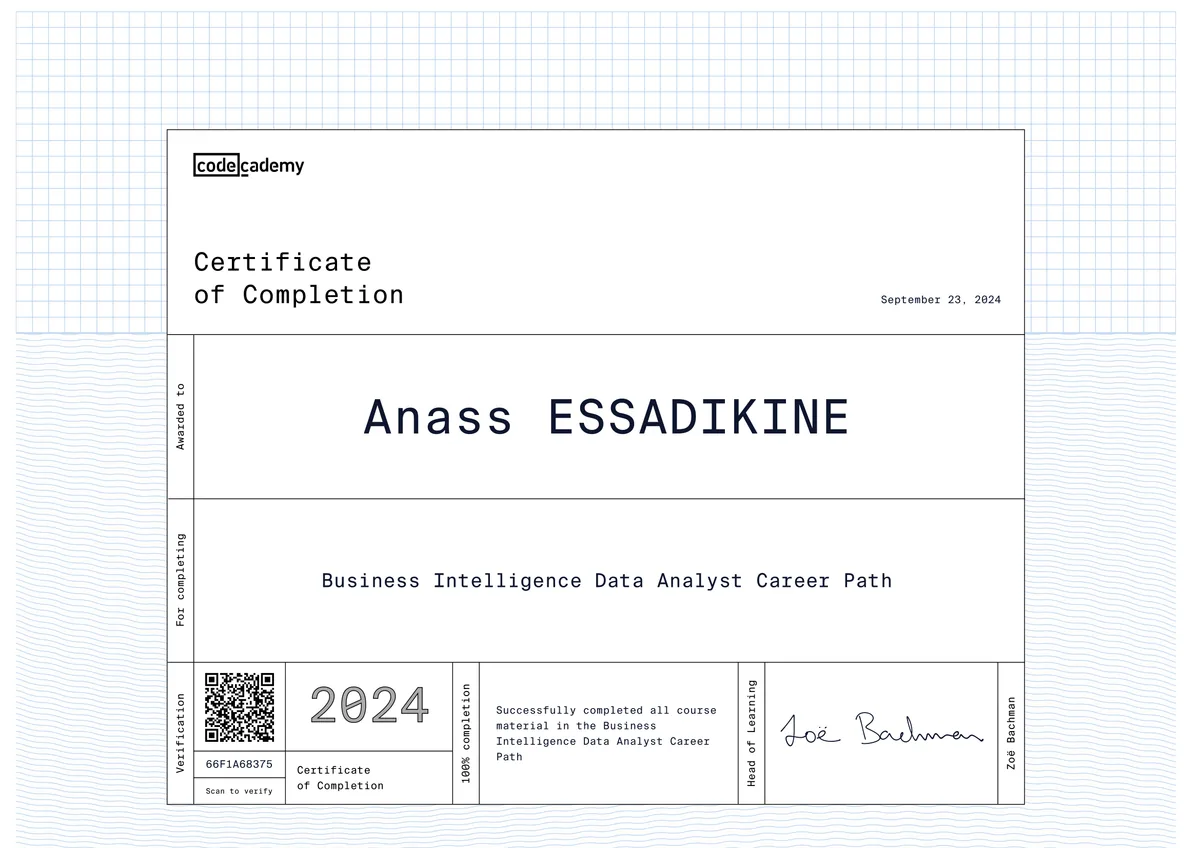
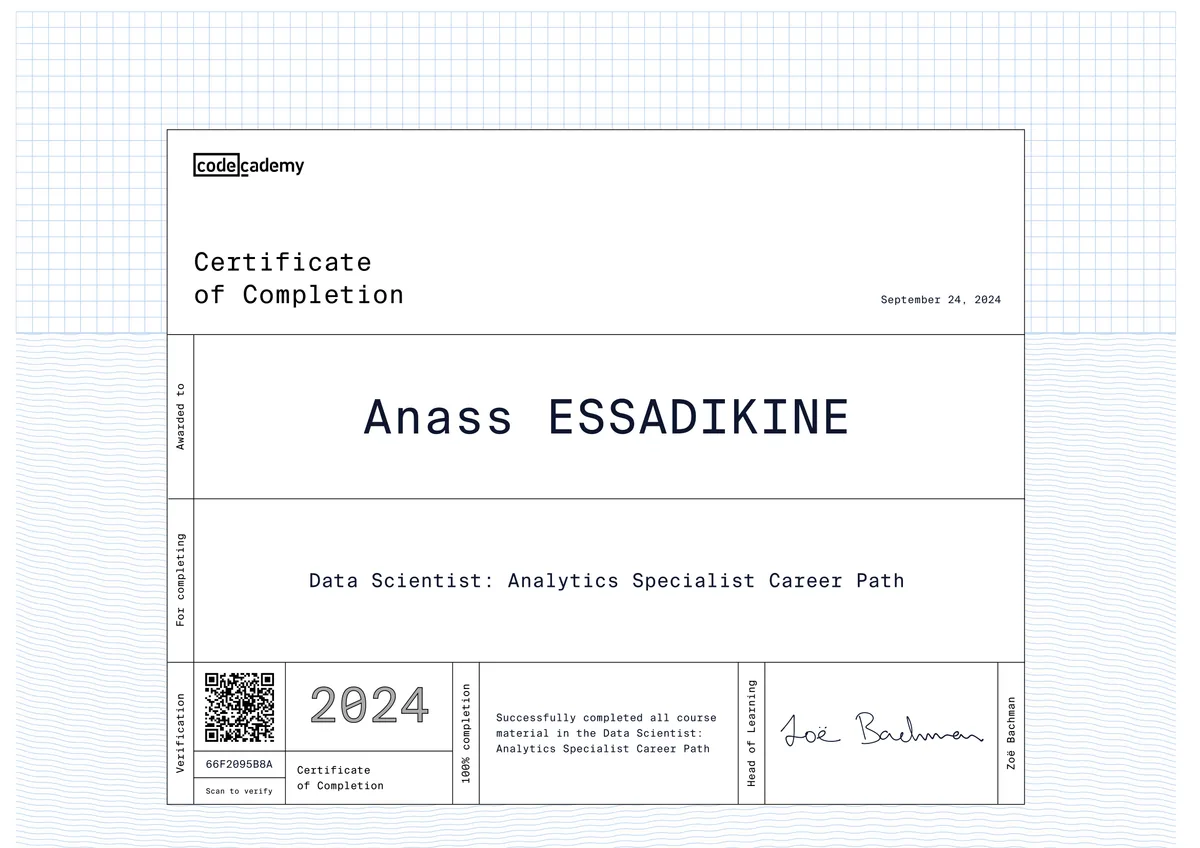
I completed Codecademy's Data Engineer Career Path: 17 courses, roughly 90 hours of project-based coursework built to teach the skills behind moving, cleaning, and storing data before anyone can analyze it. It covers what a junior data engineer is expected to touch on day one: Python, relational databases with SQL, Pandas for data wrangling, PySpark for big data, Git for version control, and MongoDB for NoSQL work, each graded on working code and real datasets rather than multiple-choice quizzes.
This credential matters because data engineering is the layer every other data role depends on. Dashboards, ML models, and analytics reports are only as good as the pipeline feeding them: if the schema is wrong, the data is dirty, or the ingestion job breaks silently, everything downstream fails. Earning this path means I can design a database schema, write production-grade SQL, clean messy real-world datasets, and choose the right data store, relational vs. NoSQL, for the job: the groundwork enterprises need before they can trust their data at all.
What I learned
Python Fundamentals & Advanced Python for Data Engineers
Core Python 3 syntax, control flow, functions, and data structures, extended into object-oriented programming, modules, and unit testing, the foundation for writing reliable, reusable data-processing scripts.
SQL Fundamentals & Advanced SQL
Designing, querying, and managing relational databases in PostgreSQL: joins, aggregations, subqueries, window functions, and schema design for analytics-ready data.
Python Pandas for Data Engineers
Using Pandas DataFrames to load, transform, merge, and analyze structured datasets directly in Python, turning raw exports into clean, query-ready tables.
Data Wrangling, Cleaning, and Tidying
Handling messy, real-world data: fixing missing values and duplicates, converting types, and reshaping raw datasets into analysis-ready structures.
Introduction to Big Data with PySpark
Distributed computing concepts and PySpark syntax for processing datasets too large, or too slow, to handle efficiently on a single machine.
Version Control with Git & GitHub
Branching, committing, and pull-request workflows for tracking changes to data engineering code and collaborating on a shared codebase.
NoSQL Databases with MongoDB
Document-based data modeling and CRUD operations for storing and querying unstructured or semi-structured data that doesn't fit a relational schema.
Command Line & Off-Platform Development
Working in a local terminal, setting up Python virtual environments, and running data pipelines and scripts outside the browser-based classroom.
Tools & technologies
- Python 3
- SQL (PostgreSQL)
- Pandas
- PySpark
- Git & GitHub
- MongoDB
- Command Line / Bash
- Jupyter Notebook
Applied in my projects
These modules map directly onto work in my portfolio. In sales-prediction-django-ml, I used Python and Pandas to clean and transform structured sales data before feeding it into Scikit-learn models, the same wrangling workflow this path teaches. In blog-management-application, I designed and queried a MongoDB Atlas datastore, applying the NoSQL data modeling from the MongoDB module. In university-housing-management-fsbm, I designed the relational schema and wrote the SQL queries behind a MySQL database, a direct application of the SQL fundamentals and schema-design skills from this certification.
Why this matters for employers
Enterprises don't just need people who can build dashboards, they need engineers who can get trustworthy data into the pipeline in the first place. This certification signals to hiring managers that I can design relational schemas, write production SQL against PostgreSQL/MySQL, clean and reshape messy datasets with Pandas, work with NoSQL stores like MongoDB when the data doesn't fit a table, and do all of it inside a Git-based workflow, backed by portfolio code, not just a course badge. That combination of relational, NoSQL, and scripting skill is exactly what junior data engineer, backend, and data-focused full-stack roles screen for, whether the team is based in Casablanca or fully remote.
Verified certificate
Download the official certificate for this achievement.
- data engineer career path
- codecademy data engineer certificate
- python data engineering skills
- SQL for data pipelines
- PySpark big data
- MongoDB NoSQL data modeling
- junior data engineer skills
- data wrangling with pandas
- data engineer Casablanca Morocco
This certification is part of my Data & AI Engineer profile. All my credentials are on the certifications page.
Related projects
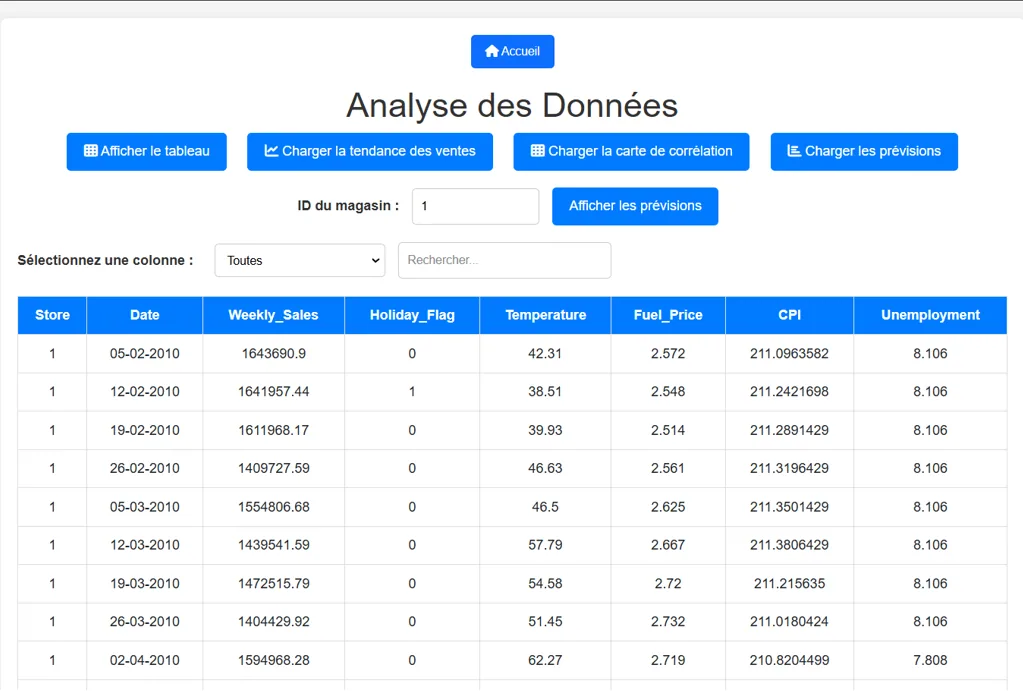
Sales Prediction App with Django & ML
A predictive analytics web app that forecasts sales and shows the results through interactive charts.
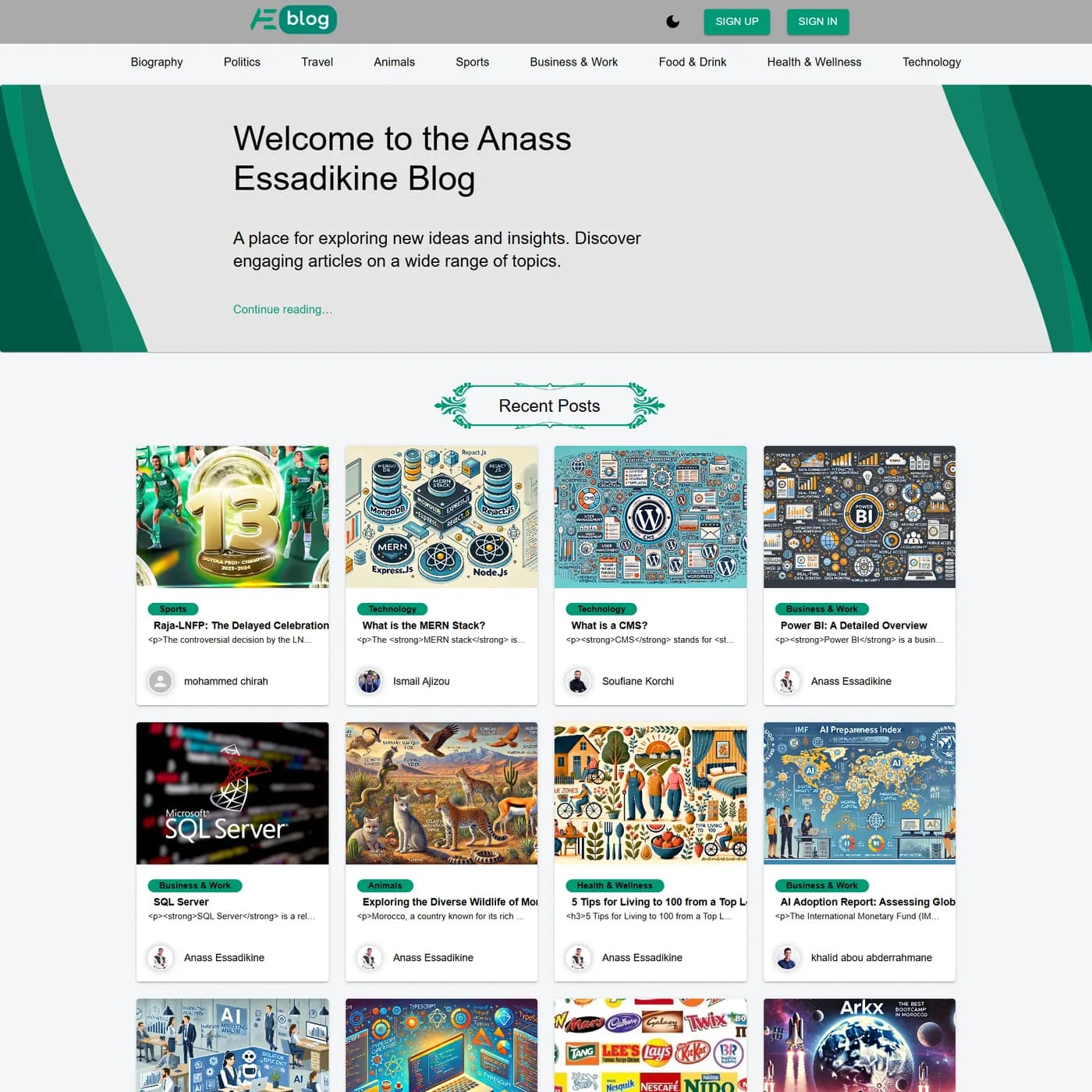
Blog Management Application (MERN)
A complete MERN blogging platform with authentication, a rich-text editor, comments and an admin dashboard with charts.
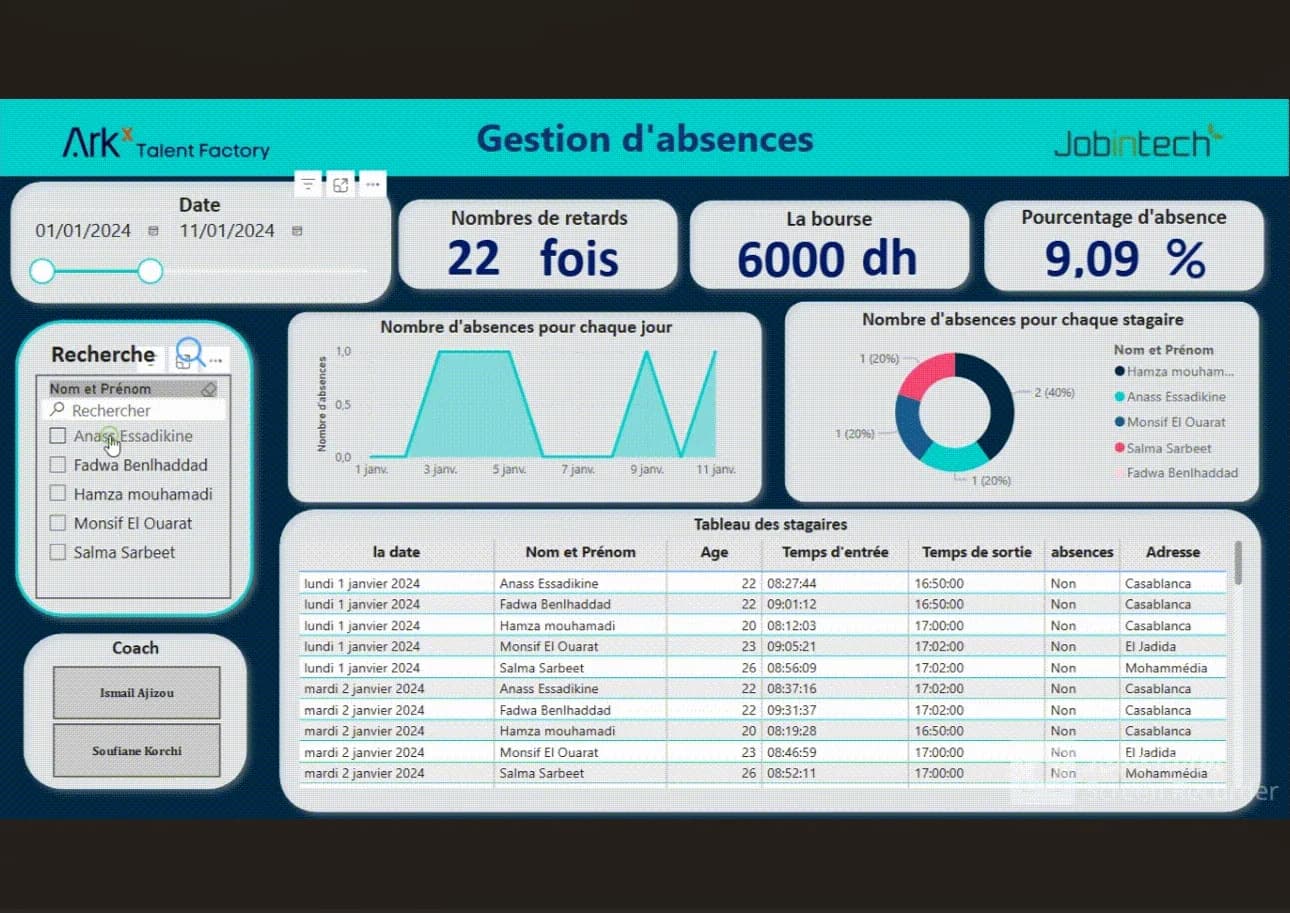
University Housing Management (FSBM)
A secure platform for managing student housing requests, allocations and payments end-to-end.
Frequently asked questions
It's a 17-course, project-based career path (about 90 hours) covering Python, SQL, Pandas, PySpark, Git, and MongoDB, designed to teach how to build and maintain real data pipelines from scratch.
It isn't an accredited degree, but recruiters treat it as solid evidence of applied skill: especially paired with real projects showing working SQL schemas, cleaned datasets, and pipeline code, which is how I use mine.
A data engineer builds and maintains the pipelines, schemas, and infrastructure that move and clean data; a data scientist analyzes that already-prepared data to build models and generate insights. This career path focuses squarely on the engineering side.
Python 3, SQL with PostgreSQL, the Pandas library, PySpark for big data, Git/GitHub for version control, MongoDB for NoSQL data, and command-line fundamentals for working outside the browser.
Yes, portfolio projects include building an analytics-ready PostgreSQL database for a bike rental company and a data pipeline that updates a subscription service's canceled-subscriber records, both graded on working code rather than multiple-choice quizzes.