Data Scientist: Inference Specialist, What This Codecademy Certification Actually Covers
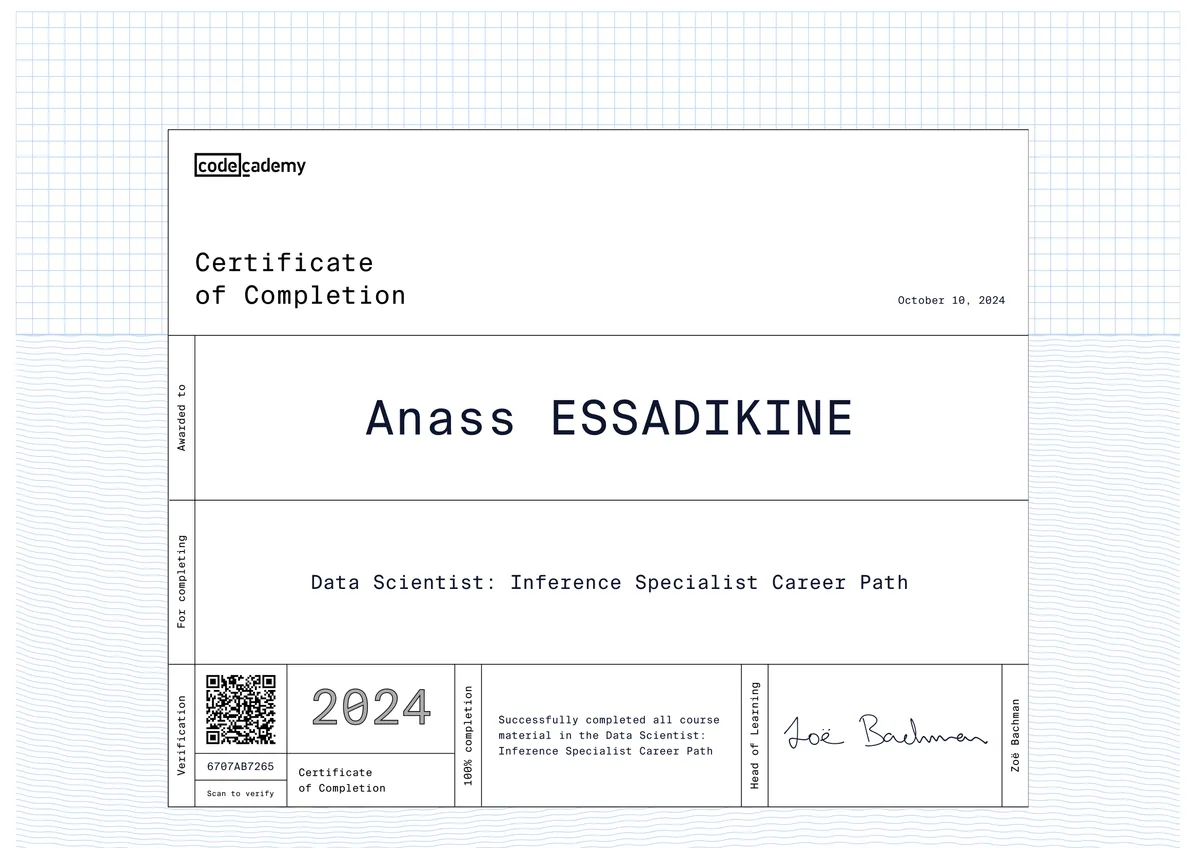
I completed Codecademy's Data Scientist: Inference Specialist Career Path, an ~85-hour, 24-unit program built around a specific question: not just "what will happen next," but "why did this happen, and can I trust the number I'm looking at?" That's the discipline of statistical inference: designing experiments, testing hypotheses, and separating a real effect from random noise using Python, SQL, and R.
It matters in industry because every product team runs experiments. A pricing test, a redesigned checkout flow, a new email subject line, someone has to determine whether the "5% lift" in the dashboard is a genuine effect or a statistical fluke before the company bets budget on it. This credential signals that I can go past building a feature or a model and actually validate whether the data supports the conclusion someone wants to draw from it, a skill most software engineering training skips entirely.
What I learned
Principles of Data Literacy
A conceptual, code-free foundation in reading, visualizing, and questioning data before writing any analysis: spotting sampling bias, misleading charts, and shaky conclusions early.
Python Fundamentals for Data Science (Parts I & II)
Core Python syntax, control flow, and functions built for data work, applied immediately in a hands-on portfolio project analyzing U.S. medical insurance costs.
Learn SQL
Querying, joining, filtering, and aggregating relational data with SQL, the standard way analysts pull clean, analysis-ready datasets straight out of a production database.
Python Pandas for Data Science
Cleaning, reshaping, and aggregating real-world datasets with pandas DataFrames, including lambda functions for custom row-level transformations.
Statistics Fundamentals I & II
Probability and distributions building up to inferential statistics: confidence intervals, p-values, and hypothesis tests including t-tests, ANOVA/Tukey, and chi-square tests for association.
Hypothesis Testing: Experimental Design
Designing A/B tests and controlled experiments, choosing sample sizes, and weighing the trade-off between statistical power, cost, and Type I/II error rates.
R Fundamentals
Reading, writing, and running statistical models and hypothesis tests in R, a second working language for teams and academic environments that standardize on R for analysis.
Portfolio Capstone Projects
Multiple applied projects, including the U.S. Medical Insurance case study, that require cleaning, analyzing, and visualizing a real dataset, then writing up findings as an inference report.
Tools & technologies
- Python 3
- SQL
- R
- pandas
- NumPy
- Matplotlib
- Hypothesis testing (t-tests, ANOVA/Tukey, chi-square)
- A/B testing & experimental design
Applied in my projects
This path's Python data stack shows up directly in Sales Prediction App with Django & ML, where I used Pandas, NumPy, Scikit-learn, Matplotlib, and Seaborn to clean sales data, engineer features, and visualize model output inside a working Django application, the same clean-analyze-visualize loop the certification's capstone projects drill. The Learn SQL module also reinforces the relational data modeling and query skills I put into practice designing the MySQL schema behind University Housing Management (FSBM), a full production system built on Spring Boot and React.
Why this matters for employers
Most self-taught developers can wire up a model or ship a feature; far fewer can say whether the metric that model produced is statistically meaningful. This certification closes that gap: I can design an A/B test, choose the right hypothesis test for a dataset, reason about sample size and Type I/II error rates, and explain the result in plain language to non-technical stakeholders: skills that map directly onto product analytics, growth engineering, and data-informed decision-making roles. Paired with hands-on SQL and Python fluency, it means I can work a data pipeline end-to-end: pull the data, clean it, test it rigorously, and ship the finding, not just the code.
Verified certificate
Download the official certificate for this achievement.
- Data Scientist: Inference Specialist
- Codecademy data science certification
- hypothesis testing
- A/B testing
- SQL for data science
- Python for data analysis
- statistical inference
- experimental design
- data scientist Morocco
- data analyst Casablanca
This certification is part of my Data & AI Engineer profile. All my credentials are on the certifications page.
Related projects
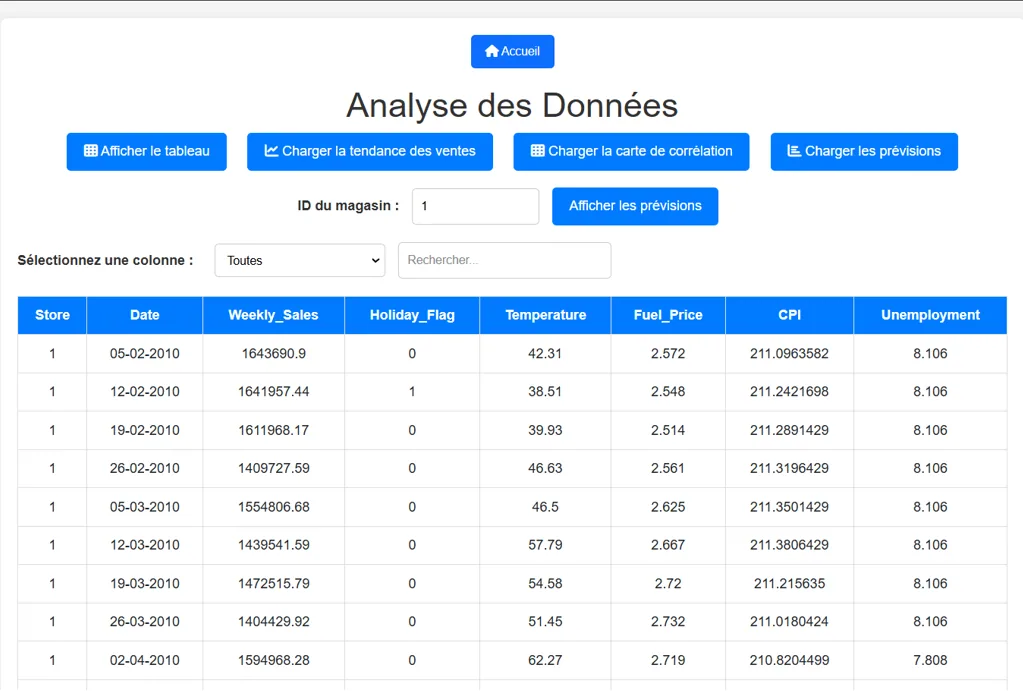
Sales Prediction App with Django & ML
A predictive analytics web app that forecasts sales and shows the results through interactive charts.
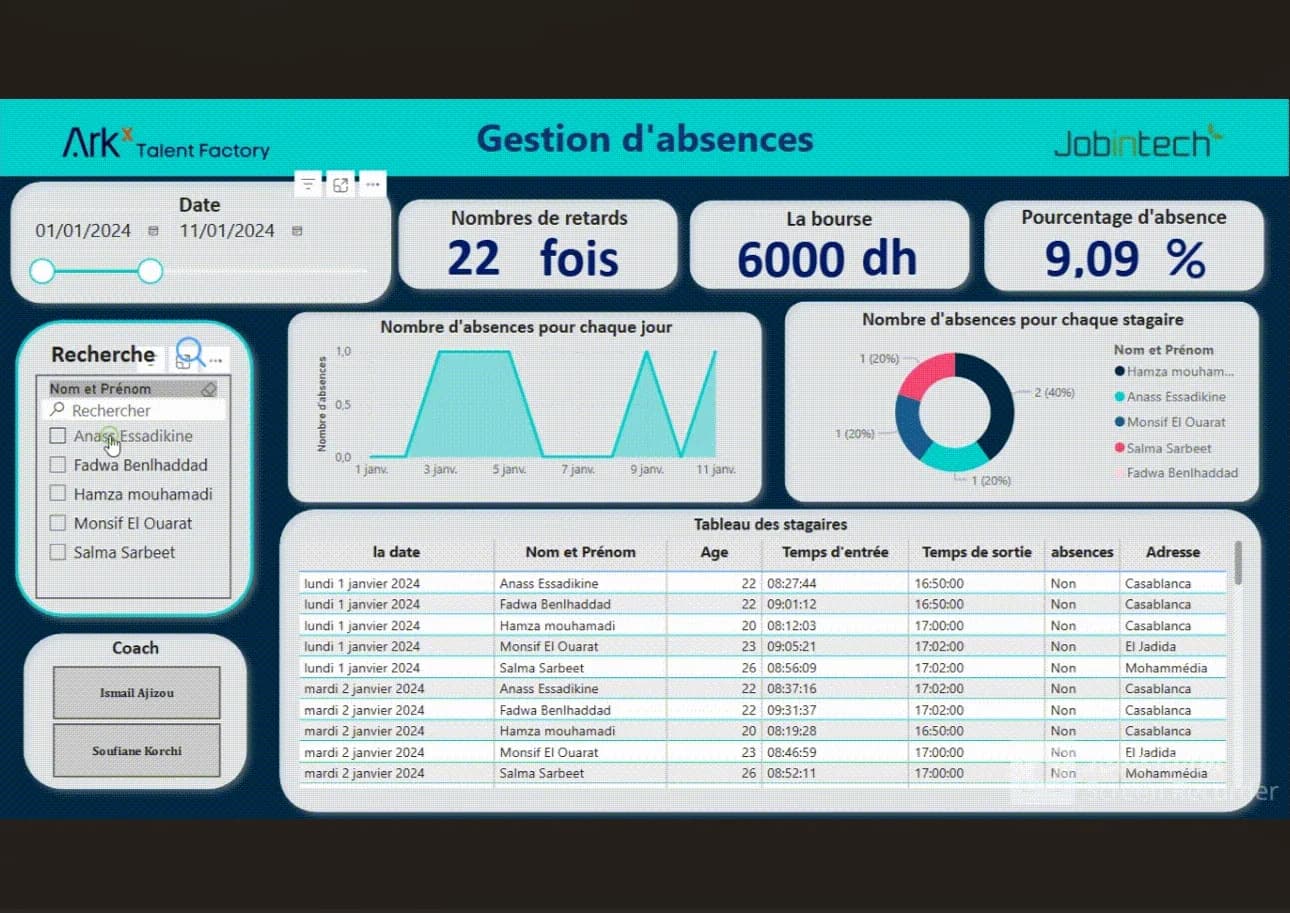
University Housing Management (FSBM)
A secure platform for managing student housing requests, allocations and payments end-to-end.
Frequently asked questions
A Career Path is Codecademy's structured, project-based curriculum that bundles multiple individual courses into one guided program aimed at a specific job role, ending in portfolio-ready projects rather than a single short course.
The Inference Specialist path focuses on statistics, hypothesis testing, and experimental design, answering "why did this happen and can I trust it", while the Machine Learning Specialist path focuses on building predictive models to answer "what will happen next." They share a Python/pandas foundation but diverge into statistics versus ML algorithms.
Both: alongside probability and hypothesis testing, the path teaches Python, pandas, SQL, and R through hands-on coding projects, so it produces someone who can run the analysis, not just describe the theory behind it.
Codecademy estimates roughly 85 hours across 24 units, combining lessons, quizzes, and around 59 hands-on exercises and projects, completed at a self-paced schedule.
Its value comes mostly from what it lets you demonstrate: employers care more about seeing the skills applied in a working project than the certificate itself, which is why I pair it with real, deployed portfolio work rather than list it alone.