Intro to Cloud Computing Certification: My AWS, Azure & GCP Foundations
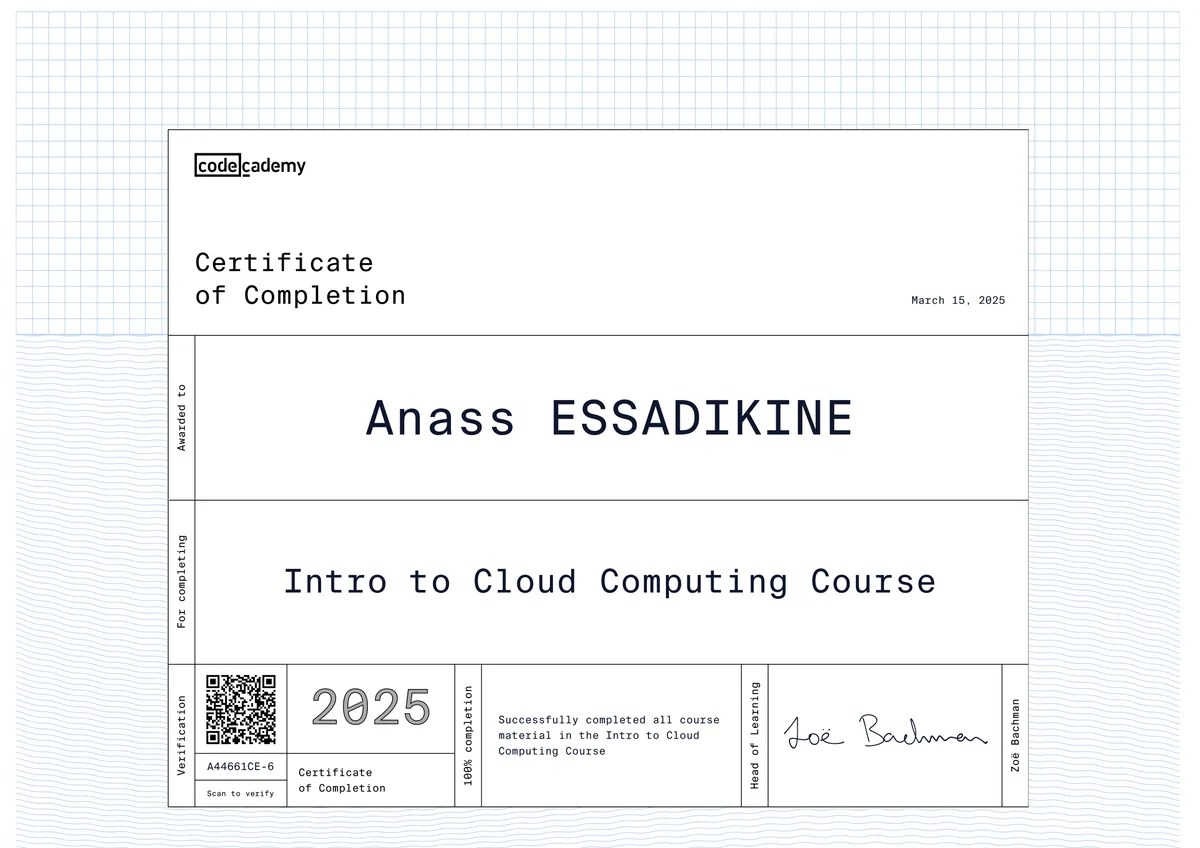
I completed Codecademy's Intro to Cloud Computing course to formalize the conceptual foundation underneath the cloud and DevOps work I already do hands-on. It's a platform-agnostic introduction to how modern infrastructure actually runs: what "the cloud" means in practice, the deployment models companies choose between, the service layers available to them, and the three major providers competing to offer it — AWS, Microsoft Azure, and Google Cloud Platform.\n\nThat shared vocabulary matters because almost no enterprise ships software on its own hardware anymore. Whether a team is weighing IaaS against PaaS, building a hybrid-cloud strategy for compliance reasons, or comparing AWS against Azure for a new workload, the engineers and decision-makers involved need to speak the same language. This course gave me that language in a structured, provider-neutral way — one I apply directly when architecting real deployments.
What I learned
1Introduction to Cloud Computing
Covers the core concept of cloud computing — accessing compute, storage, and services on demand over the internet — and why it has replaced on-premises infrastructure for most modern businesses.
2Careers in Cloud
Surveys the job roles inside a cloud-and-infrastructure team — cloud engineer, cloud architect, DevOps engineer — and how each one fits into how a company builds and runs its systems.
3Cloud Deployment Models
Breaks down public, private, hybrid, and multi-cloud deployment strategies, and the cost, control, and compliance tradeoffs that determine which model fits a given workload.
4Types of Cloud Services
Distinguishes Infrastructure as a Service (IaaS), Platform as a Service (PaaS), and Software as a Service (SaaS), with real-world examples at each layer of the cloud stack.
5Cloud Providers
Compares the core offerings and market positioning of the three major hyperscalers — Amazon Web Services, Microsoft Azure, and Google Cloud Platform — and how to evaluate one against another for a given workload.
6Foundations of Cloud Computing Survey
A graded assessment across deployment models, service types, and providers that must be passed to earn the course's certificate of completion.
Tools & technologies
Applied in my projects
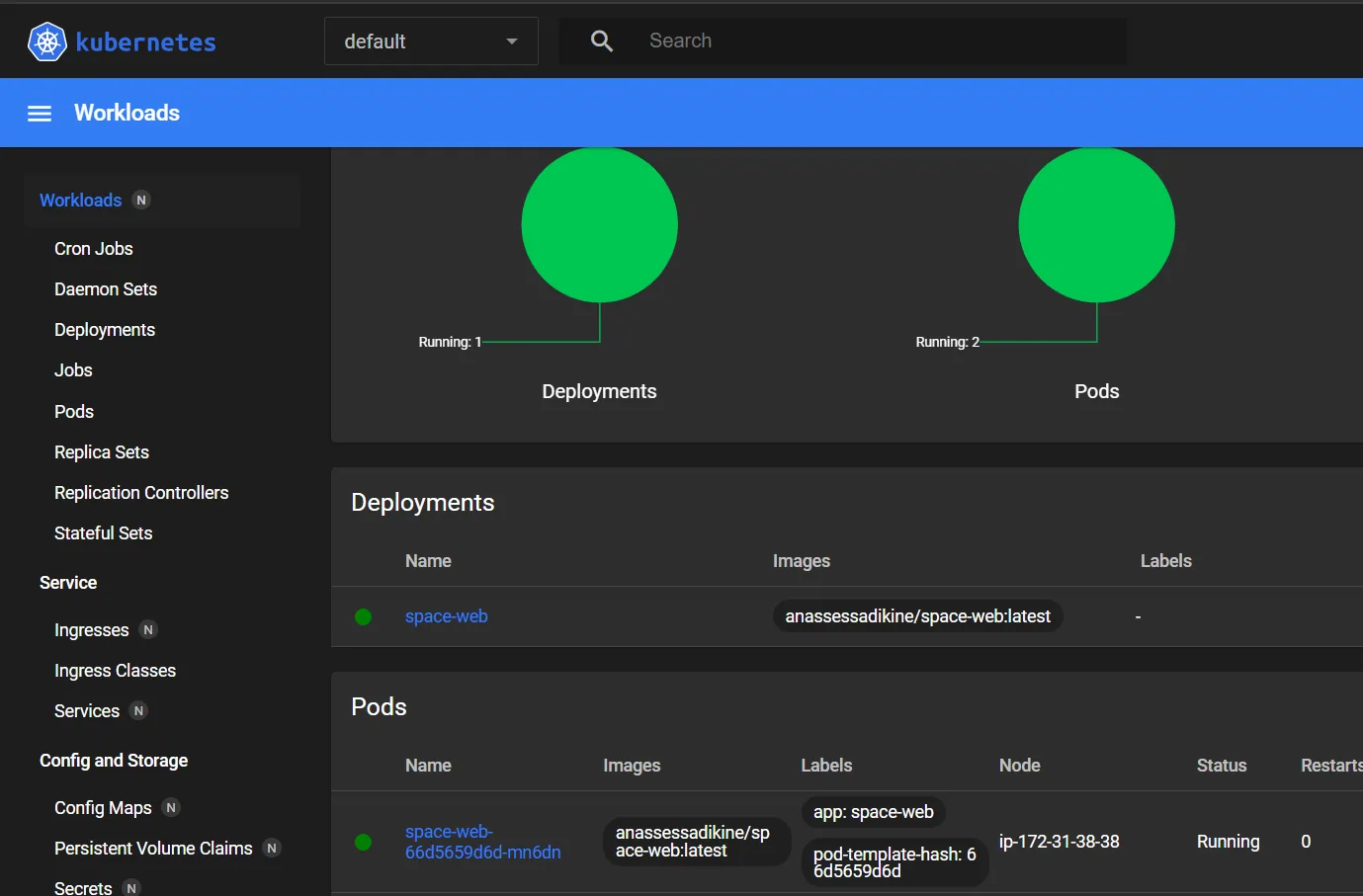
The clearest bridge from this course to my real work is the Cloud Deployment with Automated CI/CD project, where I provisioned AWS infrastructure with Terraform, configured servers with Ansible, containerized a React/Vite front end with Docker and Docker Hub, and automated the build-and-release cycle through a Jenkins pipeline onto a K3s cluster. The service-model and deployment-model concepts from this course — IaaS on AWS, public-cloud tradeoffs — aren't abstract there; they're the decisions I actually made when designing that pipeline.
Why this matters for employers
Cloud is the default deployment target for nearly all enterprise software, and hiring managers expect even application-focused developers to speak the vocabulary fluently: IaaS vs. PaaS vs. SaaS, public vs. private vs. hybrid, why a team picks AWS over Azure for a given workload. This course locks down that conceptual layer, and it isn't theory in isolation — it's the same vocabulary behind the AWS infrastructure I provisioned with Terraform, configured with Ansible, and shipped through a Jenkins pipeline onto a K3s cluster in the Cloud Deployment with Automated CI/CD project. For a company hiring a full-stack developer who can also reason about infrastructure decisions, deployment tradeoffs, and provider selection — not just write application code — that combination is exactly what shortens ramp-up time on a DevOps-adjacent role.
Related projects
 Cloud / DevOps2024
Cloud Deployment with Automated CI/CD
An end-to-end CI/CD pipeline that builds, containerizes and deploys a React app to AWS automatically.
Frequently asked questions
It's a beginner, platform-agnostic course in Codecademy's Foundations of Cloud Computing path, covering what cloud computing is, cloud career paths, deployment models, service models (IaaS/PaaS/SaaS), and the major providers — AWS, Microsoft Azure, and Google Cloud Platform. It ends with a graded assessment and a certificate of completion.