Introduction to DevOps: The Foundational Credential Behind My CI/CD and Cloud Deployment Work
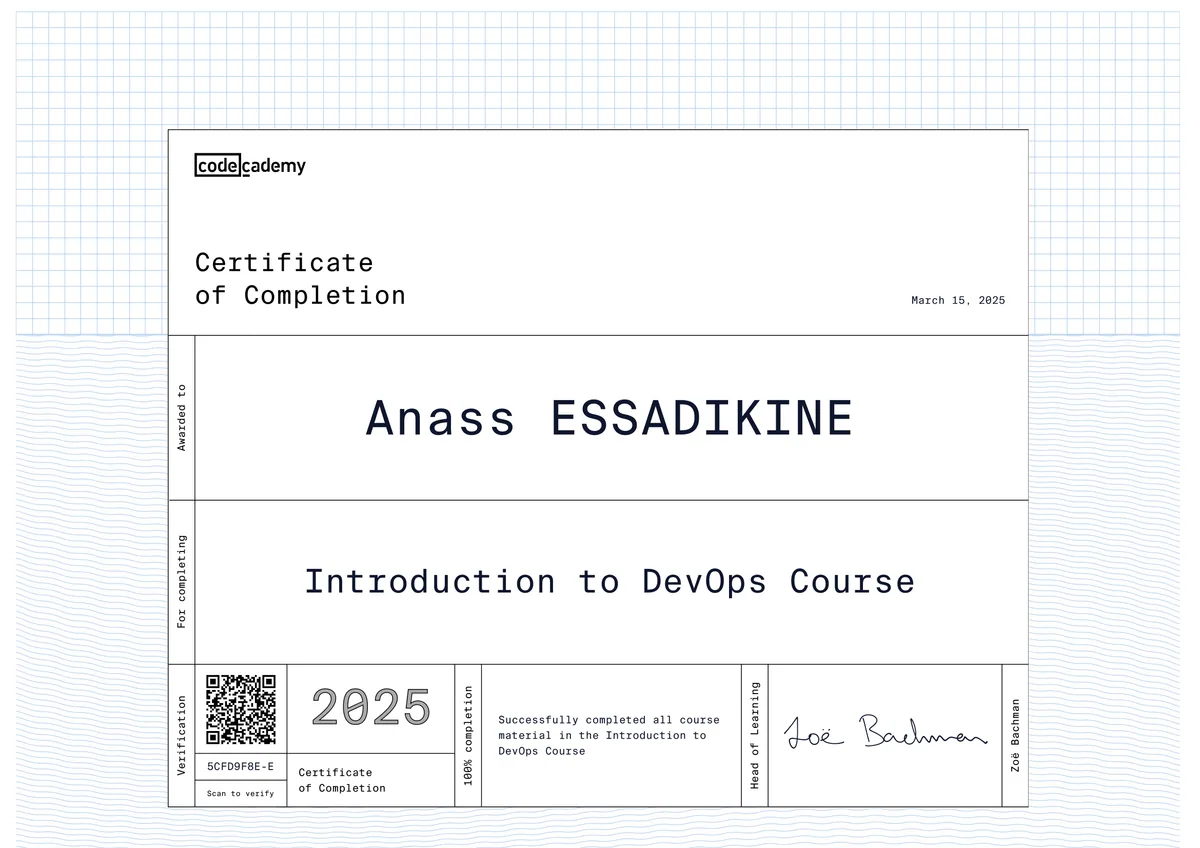
Introduction to DevOps is Codecademy's foundational, ~2-hour course on the culture, processes, and technical pillars that let modern software teams ship code reliably and fast. It's a conceptual, beginner-level credential — no prior experience required — built around five modules: DevOps culture, infrastructure management, monitoring, resiliency, and CI/CD pipelines. Rather than teaching one tool, it teaches the mental model that every DevOps tool (Docker, Jenkins, Terraform, Kubernetes, and the rest) is built to serve.\n\nThat mental model matters because most engineering failures aren't caused by bad code — they're caused by broken handoffs between the people who write software and the people who run it in production. Companies increasingly expect developers, not just dedicated "ops" staff, to understand deployment pipelines, system scaling, and failure recovery. This course is the conceptual layer that makes the hands-on DevOps tooling I use in production — Docker, Jenkins, Kubernetes (K3s), Terraform, and Ansible — make sense as a coherent system rather than a list of commands.
What I learned
1Introduction to DevOps Culture and Processes
Covers what DevOps culture actually means: breaking down the traditional wall between Development and Operations teams, adopting systems-level thinking, using feedback loops, and running blameless retrospectives instead of assigning blame after incidents.
2Infrastructure
Compares traditional and DevOps approaches to managing systems — vertical vs. horizontal scaling, virtualization vs. containerization, and cloud-based infrastructure — and introduces Infrastructure as Code (IaC) and orchestration, using Kubernetes as the reference example.
3Monitoring
Introduces how teams gain visibility into system health using Service Level Indicators (SLIs), Service Level Objectives (SLOs), and Service Level Agreements (SLAs), plus the concept of observability and the risk of noisy, non-actionable alerts.
4Resiliency
Explains how systems stay available under failure using techniques like caching, input validation, and load balancing, and how resiliency is measured through recovery time and request availability during an incident.
5CI/CD/CD Pipelines
Breaks down Continuous Integration, Continuous Delivery, and Continuous Deployment (the course's own "CI/CD/CD" framing), including trunk-based development, automated testing at each pipeline stage, and feature flags for safely releasing incomplete work.
Tools & technologies
Applied in my projects
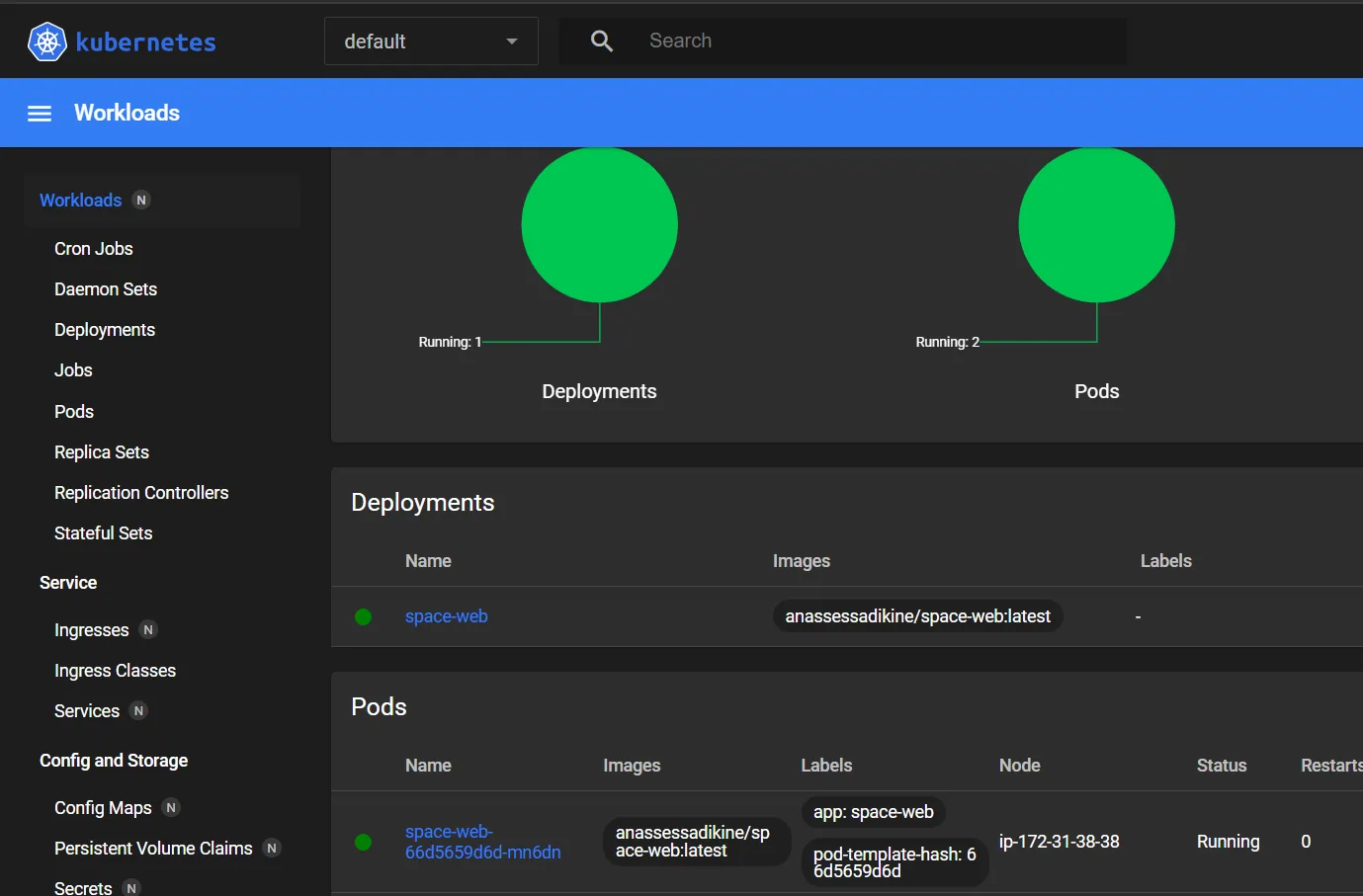
The clearest link is my Cloud Deployment with Automated CI/CD project, where I put every one of these concepts into practice: containerizing a React/Vite app with Docker, pushing images to Docker Hub, orchestrating deployment on a K3s Kubernetes cluster, provisioning AWS infrastructure with Terraform, configuring servers with Ansible, and automating the whole release pipeline with Jenkins. Where this course explains why CI/CD, IaC, and resiliency practices exist, that project is where I actually built the pipeline, the cloud infrastructure, and the automation around it — the concept-then-implementation loop that makes DevOps knowledge stick.
Why this matters for employers
This credential shows I don't treat deployment as someone else's problem: I understand the full path code takes from a developer's laptop to production — version control, automated testing, containerized builds, orchestrated infrastructure, and monitored, resilient systems. That means I can work productively alongside DevOps and cloud engineers instead of throwing code "over the wall" to them. Paired with hands-on CI/CD, Docker, Kubernetes, Terraform, and AWS experience, it makes me a full-stack hire who reasons about scalability, uptime, and release risk — not just feature code — which is exactly the profile companies look for when hiring developers for cloud-native and DevOps-adjacent roles, in Morocco and internationally.
Related projects
 Cloud / DevOps2024
Cloud Deployment with Automated CI/CD
An end-to-end CI/CD pipeline that builds, containerizes and deploys a React app to AWS automatically.
Frequently asked questions
It's a beginner-level, roughly 2-hour Codecademy course covering DevOps culture, infrastructure management, monitoring, resiliency, and CI/CD pipelines. It teaches the concepts and vocabulary of DevOps rather than a single specific tool, and requires no prior experience.