Data Engineer in Morocco: Role, Salary and Roadmap
Data engineers build the pipelines and warehouses that every dashboard and AI model depends on. Here is the role, the stack, indicative salaries in Morocco and a practical roadmap.
What does a data engineer do?
A data engineer builds and runs the systems that move data from where it is produced (applications, ERP, CRM, files, APIs) to where it is used (data warehouses, dashboards, machine-learning models), in a clean, documented and reliable way. Data analysts and data scientists consume the data; data engineers make sure it arrives on time, in the right shape and without silent errors.
In Moroccan companies, the role often covers:
- Writing ETL / ELT pipelines in SQL and Python to extract, clean and load data (ETL vs ELT explained).
- Designing and maintaining a data warehouse with fact and dimension tables (data warehouse explained).
- Scheduling and monitoring jobs with an orchestrator, and fixing them when a source changes.
- Adding data quality checks: duplicates, missing values, unexpected volumes.
- Managing access, performance and costs on a database or cloud platform.
- Working with IT, security and business teams on what data exists and who may use it.
Data engineer vs data analyst vs data scientist
| Data engineer | Data analyst | Data scientist | |
|---|---|---|---|
| Main goal | Reliable, available data | Answers and dashboards | Predictions and models |
| Core languages | SQL, Python | SQL, DAX, some Python | Python, SQL |
| Typical tools | Airflow, dbt, Spark, Kafka, Docker, cloud | Excel, Power BI, Tableau | pandas, scikit-learn, notebooks |
| Main output | Pipelines, warehouses, data models | Reports, analyses | Models, experiments |
Many data engineers start as analysts or back-end developers. If you are earlier in your path, the data analyst roadmap for Morocco is a good first step.
Which skills does a data engineer need?
Foundations
- Advanced SQL: joins, CTEs, window functions, indexes, query plans. SQL is the daily language of the role; see SQL queries for data analysis for the fundamentals.
- Python: scripts, pandas, working with APIs and files, packaging, tests.
- Data modelling: normalised models for applications, star schemas for analytics, slowly changing dimensions.
- Linux, Git and the command line.
Pipelines and platforms
- Orchestration: Apache Airflow is the most common open-source choice; documentation is on airflow.apache.org.
- Transformation: dbt or plain SQL models; low-code tools such as KNIME, Talend or SSIS still appear in many local offers.
- Big data and streaming (for larger companies): Spark, Kafka.
- Containers and CI/CD: Docker, a pipeline that tests and deploys automatically (CI/CD example).
- Cloud: one provider in depth (Azure, AWS or GCP). Azure is frequent in Moroccan banks and large groups that already use Microsoft tools, but this depends on each company.
A typical pipeline step: an idempotent load
A pattern every data engineer uses: load a daily batch into a table so that re-running the job does not create duplicates. In PostgreSQL:
INSERT INTO dw.fact_payments (payment_id, customer_id, payment_date, amount_mad, loaded_at)
SELECT
    s.payment_id,
    s.customer_id,
    s.payment_date,
    s.amount_mad,
    now()
FROM staging.payments AS s
WHERE s.payment_date = CURRENT_DATE - 1
ON CONFLICT (payment_id) DO UPDATE
SET customer_id  = EXCLUDED.customer_id,
    payment_date = EXCLUDED.payment_date,
    amount_mad   = EXCLUDED.amount_mad,
    loaded_at    = EXCLUDED.loaded_at;
This requires a unique constraint on payment_id. The syntax is documented in the PostgreSQL INSERT reference.
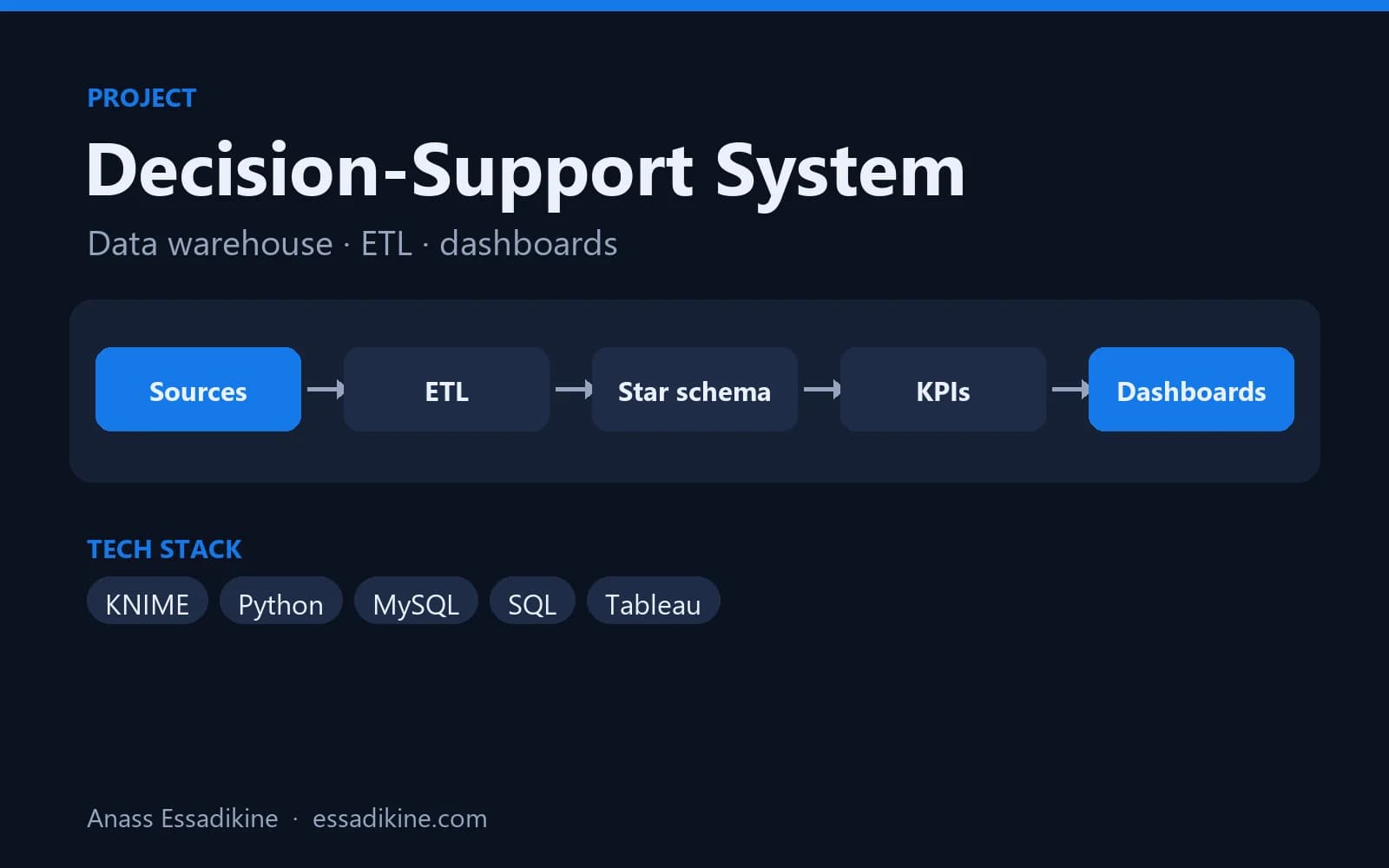
The same thinking applies whatever the tool: the CNSS decision-support project used ETL flows in KNIME and Python to clean, standardise and load heterogeneous files into a MySQL star-schema warehouse, replacing manual file preparation with repeatable flows.
How much does a data engineer earn in Morocco?
We are not aware of a reliable public salary survey for this role in Morocco, so the figures below are indicative orders of magnitude from the general market, not official data. They are gross monthly salaries in MAD and vary significantly by company, city, sector and experience.
| Level | Experience | Indicative gross monthly range (MAD) |
|---|---|---|
| Junior | 0–2 years | about 8,000 – 13,000 |
| Mid-level | 2–5 years | about 13,000 – 22,000 |
| Senior / lead | 5+ years | about 22,000 – 35,000, sometimes more |
Data engineering roles generally sit somewhat above data analyst roles at the same level, because the stack is more technical and fewer candidates have production experience. Net pay is lower than gross after contributions and income tax; compare offers on the same basis (gross or net, number of months, bonuses, health insurance).
What moves the salary?
- Company type: banks, insurers, telecom operators, multinationals and large consulting or offshoring firms usually offer the higher ranges.
- City: Casablanca and Rabat hold most of the offers; Tangier, Marrakech and Fès have fewer.
- Cloud and big data experience: proven work on Azure, AWS or GCP, Spark or Kafka in production raises your value.
- Production responsibility: being on call for critical pipelines or owning a platform is paid more than building prototypes.
- English: required for many offshoring and remote positions with foreign companies, which can pay above local ranges.
- Certifications: cloud data certifications help a CV pass filters, but real projects weigh more in interviews.
Where do Moroccan employers post data engineer jobs?
- LinkedIn: the main channel, especially for banks, consulting firms, multinationals and remote roles.
- ReKrute: a major Moroccan job board used by large companies and recruitment firms.
- Emploi.ma: a widely used Moroccan job board with offers across sectors.
- Company career pages: banks, telecom operators, large industrial groups, IT services and consulting firms often publish there first.
- PFE internships: the most common entry route for engineering and master's students.
Titles vary: "Data Engineer", "Ingénieur Data", "Ingénieur Big Data", "Développeur ETL", "Ingénieur BI". Search all of them.
A 6–12 month data engineer roadmap
This plan assumes you already know basic programming and about 10–15 hours per week. If you start from zero, add two to three months at the beginning.
| Period | Focus | Concrete deliverable |
|---|---|---|
| Months 1–2 | Advanced SQL, PostgreSQL, data modelling | A normalised schema and 40 analytical queries on it |
| Months 2–4 | Python for data: files, APIs, pandas, tests, Git | A script that extracts data from a public API and loads PostgreSQL |
| Months 4–6 | Warehouse and ETL/ELT: star schema, incremental loads, dbt or SQL models | A small warehouse with one fact table, 3–4 dimensions and daily loads |
| Months 6–8 | Orchestration and quality: Airflow, retries, data checks, logging | The pipeline scheduled in Airflow with alerts on failed checks |
| Months 8–10 | Docker, CI/CD and one cloud provider | The whole project containerised and deployed on a cloud free tier |
| Months 10–12 | Spark or streaming basics, portfolio, CV, applications | A documented end-to-end project online and weekly targeted applications |
What a good portfolio project looks like
An end-to-end project is worth more than many small exercises. For example: collect daily data from a public source, store raw files, transform them into a star schema in PostgreSQL, schedule it with Airflow, test data quality, and expose a simple dashboard on top. Document the architecture, choices and limits in a README. Recruiters want to see that you understand failures, re-runs and data quality, not only the happy path.
How do you pass a data engineer interview?
- SQL: window functions, deduplication, incremental logic, query optimisation.
- Python: reading files and APIs, error handling, a small transformation exercise.
- Design: "Design a pipeline that loads daily sales from 50 stores": sources, staging, transformations, scheduling, monitoring, re-runs.
- Modelling: star schema, grain, slowly changing dimensions.
- Operations: what you do when a job fails at 3 a.m. or a source column changes.
Conclusion
Data engineering is the foundation under every reliable dashboard and AI project. Employers in Morocco look for strong SQL and Python, data modelling, orchestration and some cloud experience. Salaries depend heavily on the company and your production experience, so treat any figure as a range to verify. A 6–12 month plan built around one complete, well-documented project is the most convincing path.
To see what this looks like in practice, explore the Data & AI engineer profile or the data engineering service.

Related projects
 Data Analytics & BIAcademic project · 2025
Decision-Support System for Social Security Data (CNSS)
A star-schema data warehouse fed by ETL flows, with analytics dashboards for decision-makers.
 Cloud & DevOpsAcademic project · 2024
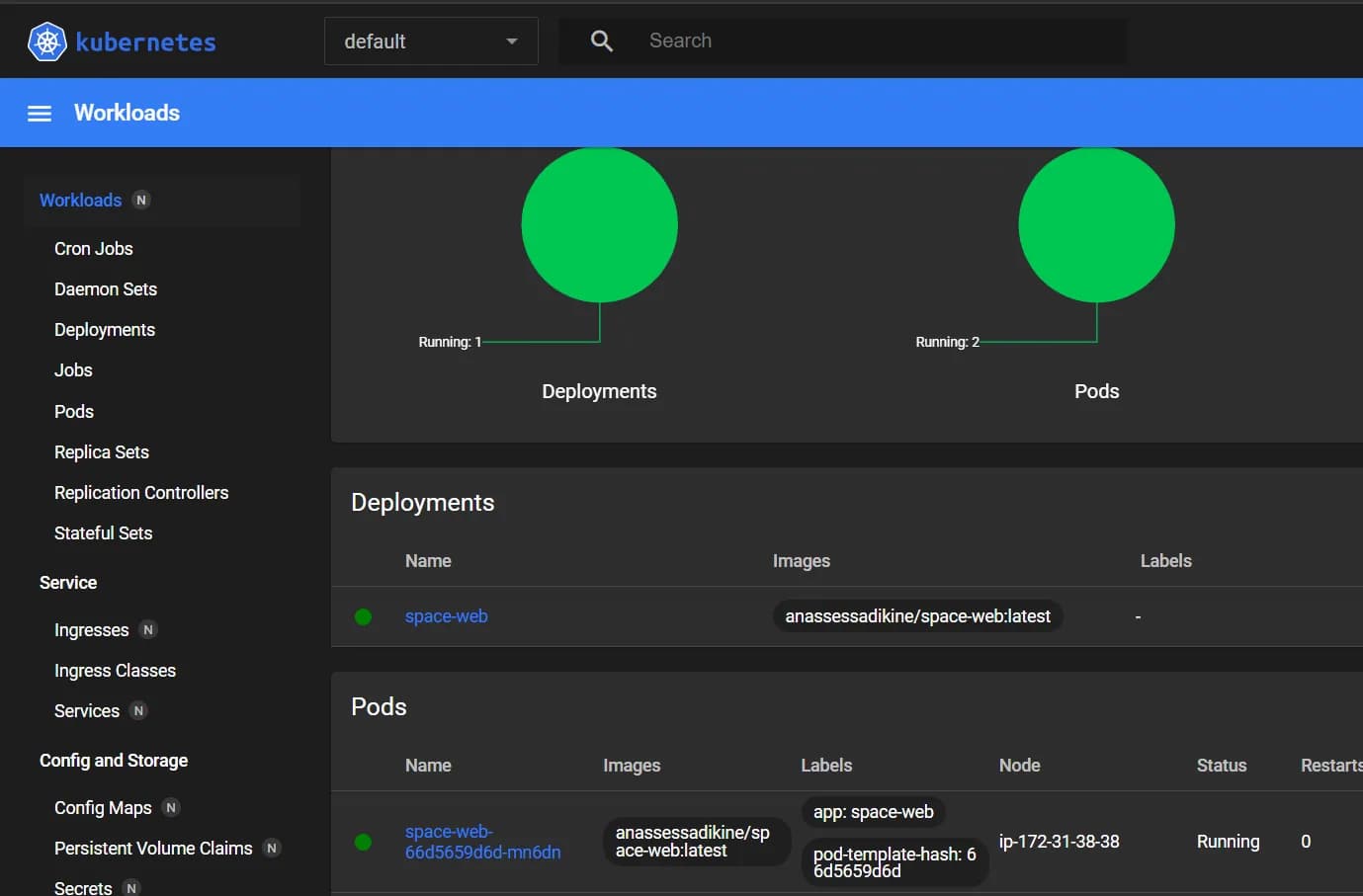
Cloud Deployment with Automated CI/CD
An end-to-end pipeline that builds, containerises and deploys a React app to Kubernetes on AWS on every push.
Frequently asked questions
Companies modernising their data platforms, especially banks, telecoms, large groups and offshoring firms, need people who can build reliable pipelines. The role is technical, valued and can lead to data architect or platform lead positions.